Owning a business listing doesn’t mean anyone is maintaining it. In a representative survey of U.S. owners of locally operating businesses, 85% reported having a Google Business Profile, but only 35% maintained an active presence, according to BrightLocal’s small-business report. That’s the gap listing management software needs to close, not adding another dashboard.
Buyers often choose by feature list, then discover that synchronization requires a higher plan, important directories aren’t supported in their country, or client permissions don’t match how their agency works. A platform can look inexpensive until you add the locations, reporting, review tools, and access controls your team needs.
Start with business fit, then compare the package. A single-location business needs manageable maintenance. An agency needs client separation and repeatable reporting. A multi-location brand needs bulk updates and exception handling. A franchise or enterprise needs clear rules about who can change what.
The tools below serve different versions of those jobs. Compare their supported publishers, plan boundaries, and operational trade-offs rather than treating the order as a universal ranking. Synup appears both as a broader marketing platform and as a narrower presence-management buying option, so those entries describe different ways to evaluate the same vendor, not independent alternatives.
Table of Contents
1. Synup
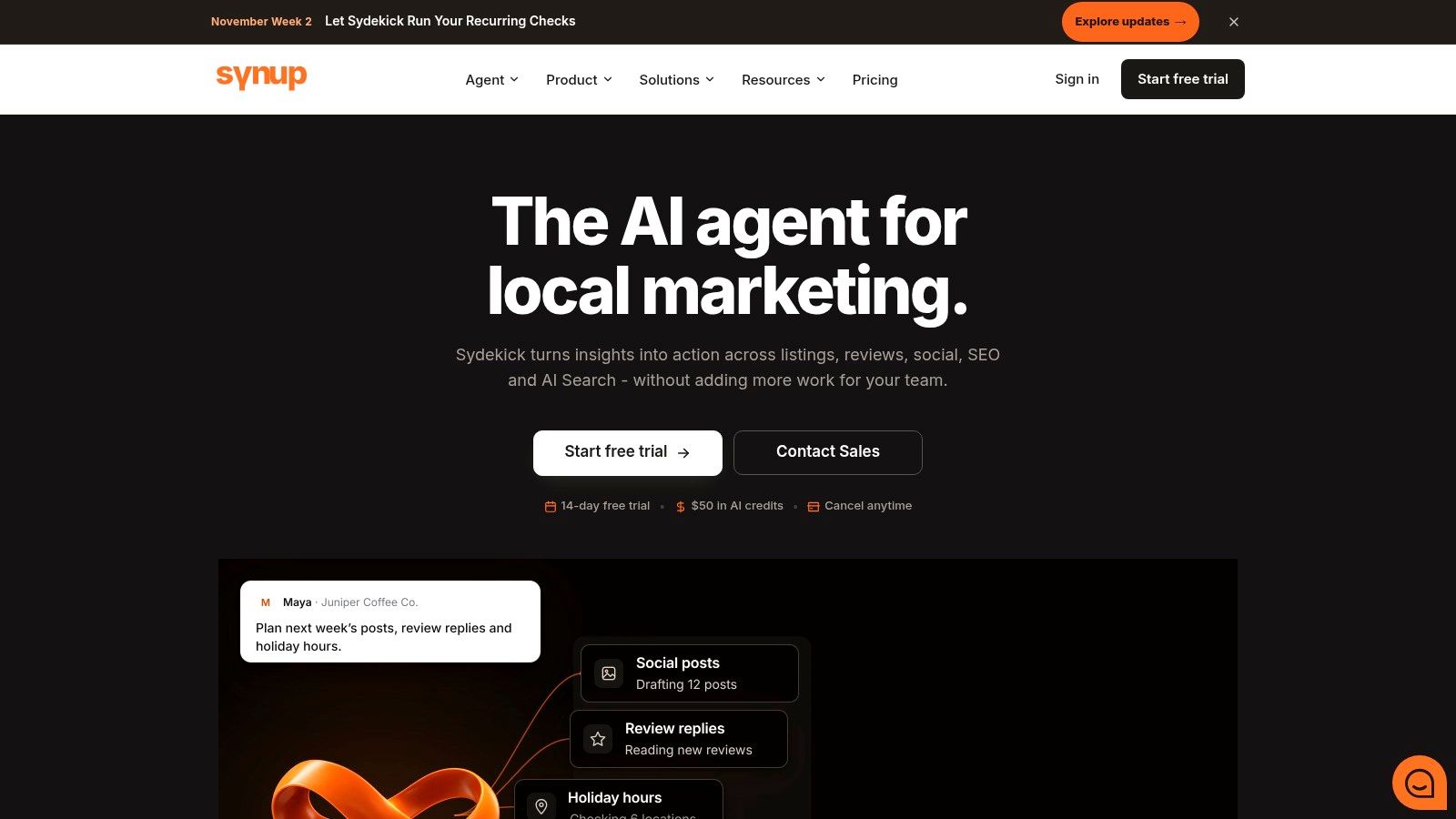
Best fit for agencies and multi-location teams that want listings connected to execution. Synup’s presence management platform combines business-profile synchronization with reviews, local publishing, visibility tracking, location pages, and agency workflows.
Its AI agent, Sydekick, is the main distinction from a conventional listings dashboard. The agent can work through tasks using brand-specific memory, playbooks, approval steps, and an audit trail. That matters when the job is more than changing hours, involving finding an issue, preparing a correction, getting permission, and publishing it.
Supported channels include Google Business Profile, Apple Business Connect, Bing, and Facebook, alongside other publishers. Evaluate coverage against your actual locations and required fields rather than accepting a network total as proof of suitability.
Where the broader platform pays off
- Agency operations: Branded portals, scoped permissions, and scheduled reporting can reduce separate client-management work.
- Local execution: Review drafts, location-level posts, and synchronized landing pages connect maintenance with ongoing marketing.
- Technical integration: APIs and model connectors make it relevant when local data needs to move through an existing software stack.
Synup describes its plan structure as including the feature suite across tiers, with allowances varying by location volume and agent throughput. The buying risk shifts from feature access to capacity: clarify what consumes agent usage, how approvals work, and what happens when allowances are exhausted.
I’d shortlist it when staff repeatedly move between listings, reviews, publishing, and client reports. For a business that only needs occasional directory corrections, the broader workflow may be unnecessary. Test autonomous changes with restricted permissions before allowing account-wide execution.
2. BrightLocal
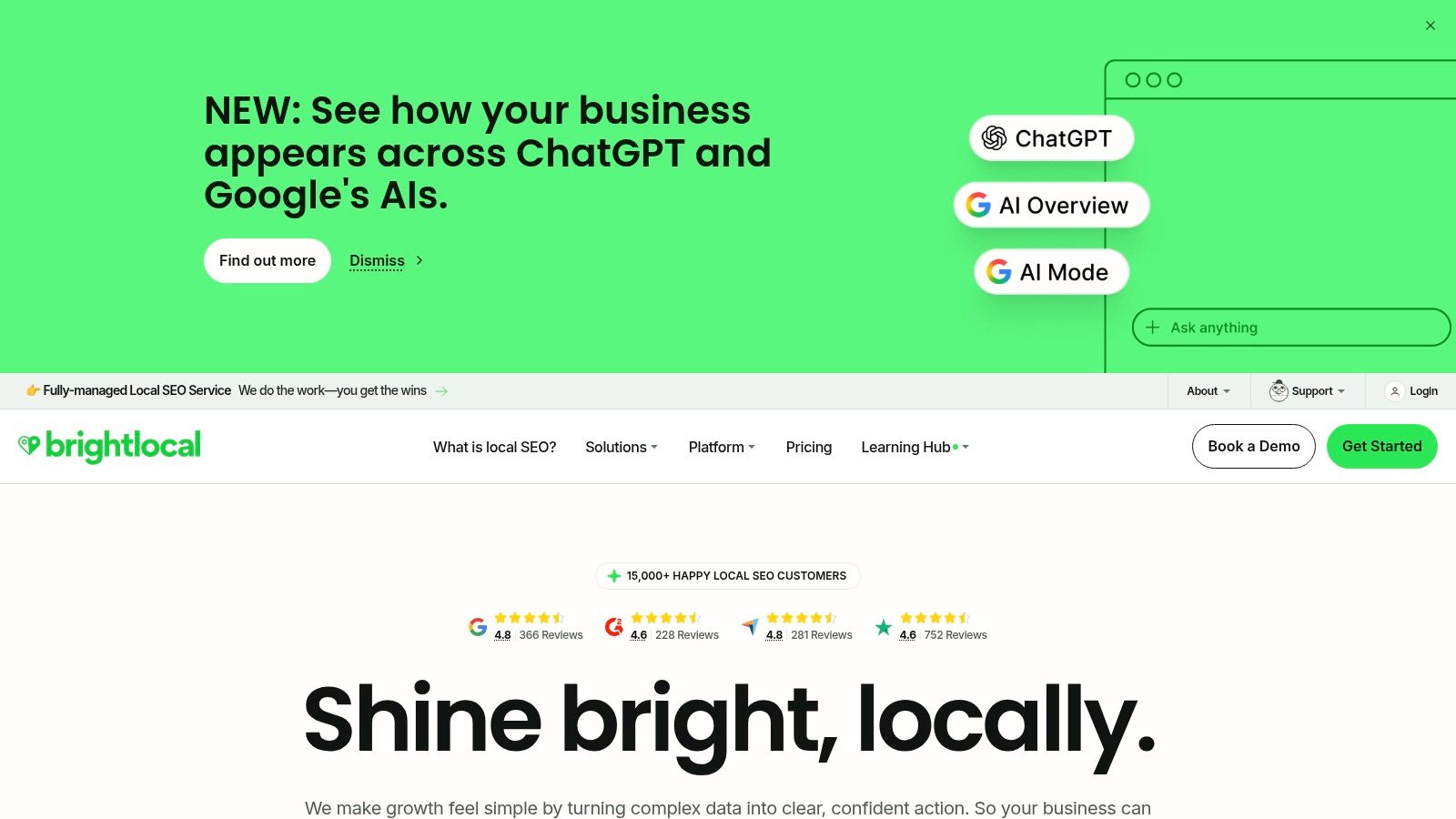
A consultant who needs to diagnose local visibility problems has a different job from an operator who only needs to update opening hours. BrightLocal suits the diagnostic job, combining listing tools with citation audits, local rank tracking, SEO audits, and reporting.
The important plan distinction is Track versus Manage. Track supports monitoring and analysis, but full listing synchronization belongs to Manage. Don’t buy the entry plan assuming every product described across the website is included.
Citation building also deserves separate attention. Creating or cleaning up citations isn’t identical to continuously synchronizing connected listings, and pay-as-you-go work should be budgeted separately from the subscription.
Buying rule: Ask whether the quoted package finds incorrect records, corrects them, or keeps correcting them. Those are different services.
BrightLocal is a practical agency option when reporting and local SEO investigation matter alongside distribution. Our local SEO tips can help turn those findings into work on business pages, local relevance, and content.
For complex brands, test permissions and approval requirements carefully. A useful audit suite doesn’t automatically provide the governance a distributed franchise needs. Compare the total package at your expected location count, including citation work and any higher-tier reputation features.
3. Semrush Local Listing Management
Already using Semrush for organic search reporting? Semrush Local can keep local presence work close to the keyword, competitor, and website analysis your team already performs.
Its local offering includes Google Business Profile tools, map-rank monitoring, and listing distribution, with capabilities divided between plans. The critical distinction is that Listing Management belongs to Local Pro, not Local Base. An existing Semrush relationship shouldn’t lead you to assume that directory synchronization is already covered.
Buy the workflow, not the familiar logo
Ask for a demonstration that starts with a location record and finishes with a confirmed publisher update. Then inspect how the team would identify a rejected change, handle a review, and report location-level visibility.
The advantage is organizational: SEO staff can work within a familiar environment rather than maintain another reporting process. The disadvantage is paying for broader functionality when your actual requirement is straightforward directory maintenance.
Per-location licensing also needs attention as your footprint grows. Request a quote using your expected location portfolio, not just the first location you’ll connect.
Semrush Local makes sense when local visibility forms part of a wider SEO engagement. For a listings-only buyer, compare the required Pro package against a dedicated distribution product rather than comparing entry-level prices that cover different jobs.
4. Moz Local
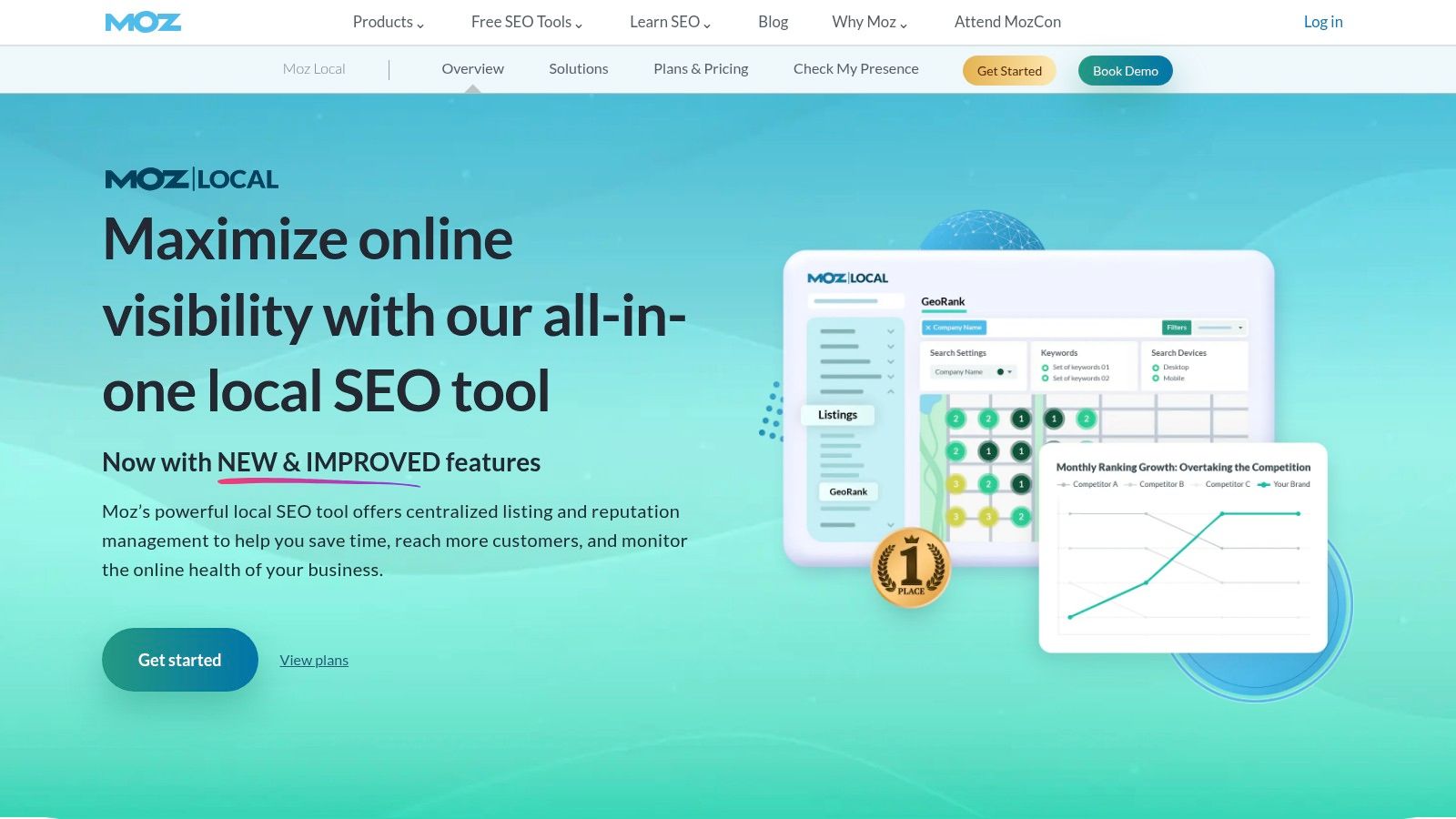
Moz Local is a sensible starting point for businesses that want location-data distribution and listing-health monitoring without immediately adopting a broader operating platform.
Its tiered approach lets buyers separate core presence maintenance from expanded review, social, and reporting capabilities. That separation helps control scope, but it also creates a common purchasing mistake: assuming review monitoring means staff can respond from the same plan.
- For core maintenance: Confirm which directories receive updates in your country and which business fields are supported.
- For reputation work: Distinguish seeing reviews from replying to them inside the platform.
- For reporting: Check whether the required location-level reports are included in the selected tier.
Moz Local fits businesses that prefer a defined local-presence product over an enterprise implementation. However, per-location subscriptions still need to be assessed across the full portfolio, and higher-tier functions can change the comparison.
Our guide to local search strategy and tactics provides a useful companion: accurate listings support a local strategy, but they don’t replace useful business pages or ongoing optimization.
I’d evaluate Moz Local by testing a real correction and reviewing the resulting listing-health feedback. A clear dashboard matters less than whether staff can understand which records still need attention and why.
5. Yext
An enterprise needs more than a shared spreadsheet with a publish button. Yext is oriented toward centralized entity management, using its Knowledge Graph to organize business information and distribute it through a publisher network.
That approach suits organizations managing locations, brands, and other business entities with different data requirements. Listings can sit alongside additional products for reviews, pages, search, and social, but buyers should treat those as contract questions rather than assumed inclusions.
The contract matters as much as the interface
Pricing is custom, so obtain a written scope covering location counts, publishers, implementation, support, and contract term. Ask which data-quality and approval workflows are available in the proposed solution.
Yext’s trade-off is straightforward: centralized control can justify a more involved procurement process, but a small business may not need that structure. Smaller buyers should establish whether they’re purchasing directly or through a reseller and who owns support.
Also discuss cancellation before signing. When Yext management ends, publisher behavior can vary. Don’t assume every listing disappears, and don’t assume all managed corrections remain protected indefinitely.
Request an exit plan that identifies account ownership, exportable data, publisher access, and responsibilities after termination. Those details are especially important when an agency manages the vendor relationship on a client’s behalf.
6. Uberall
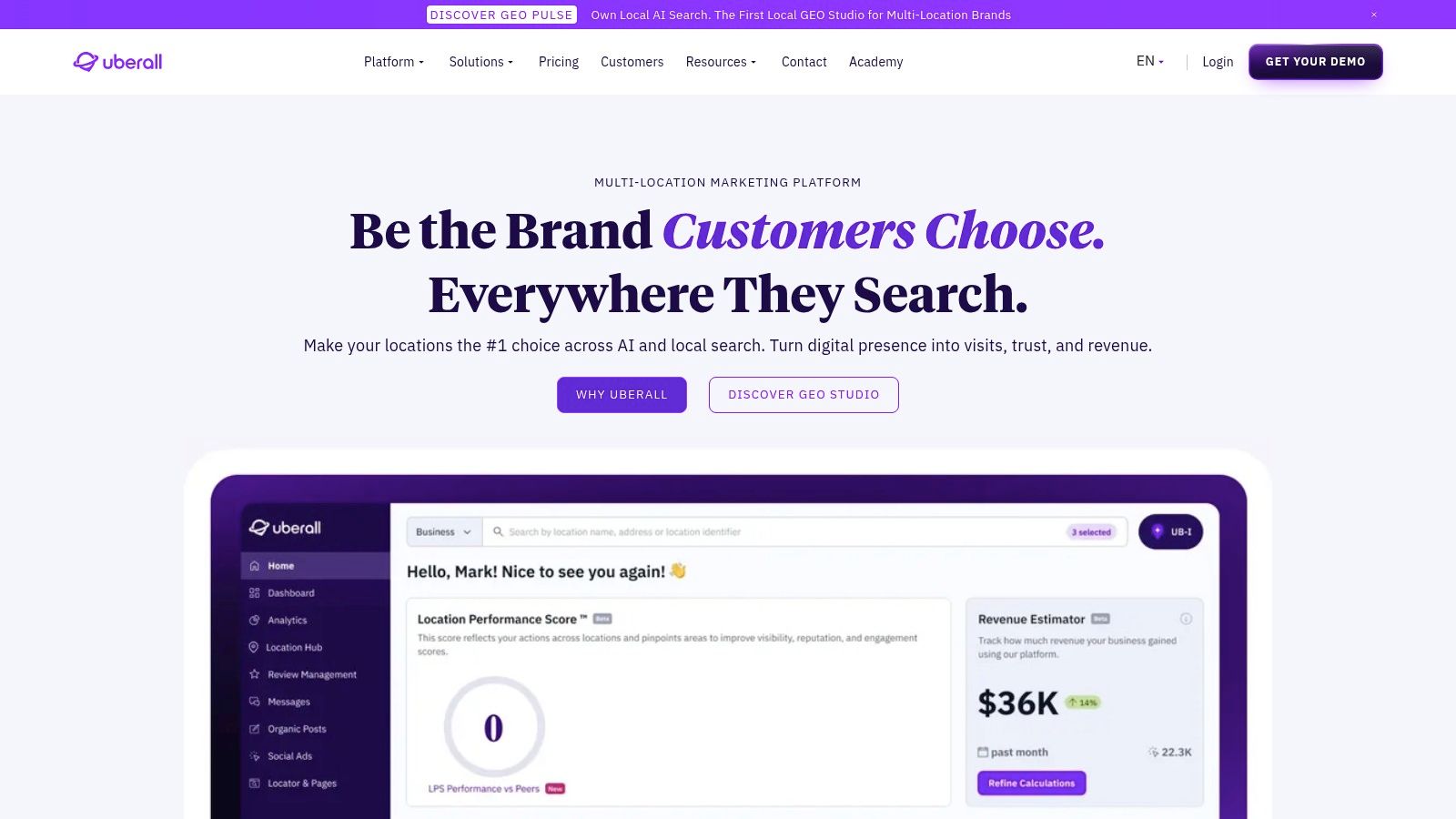
Say a retail brand needs to change holiday hours centrally while keeping local photos current. Uberall is built around that multi-location operating problem, combining listing distribution with bulk location management and related local marketing products.
Its appeal is the ability to manage location information, duplicate issues, and media within a broader environment. Reviews, social publishing, analytics, and location pages can extend the workflow, depending on the package.
Consumers don’t necessarily stay within a single discovery channel: 75% used more than one channel during their latest local-business search in BrightLocal’s U.S. consumer survey. For an Uberall evaluation, that makes publisher-specific coverage and reporting more useful than a single combined visibility total.
- Package boundary: Establish which reviews, social, pages, and analytics functions are included.
- Operational boundary: Test who can edit local details and who approves brand-sensitive changes.
- Support boundary: Get clear ownership for failed updates and unresolved duplicates.
Uberall is more relevant to a brand coordinating many locations than to an owner maintaining a single profile. Some packages require a quote, so compare the complete operating package, not a headline description of listings alone.
Ask the demonstrator to show an exception, not just a successful bulk update. Staff need a workable response when a publisher rejects a field.
7. Birdeye Listings AI
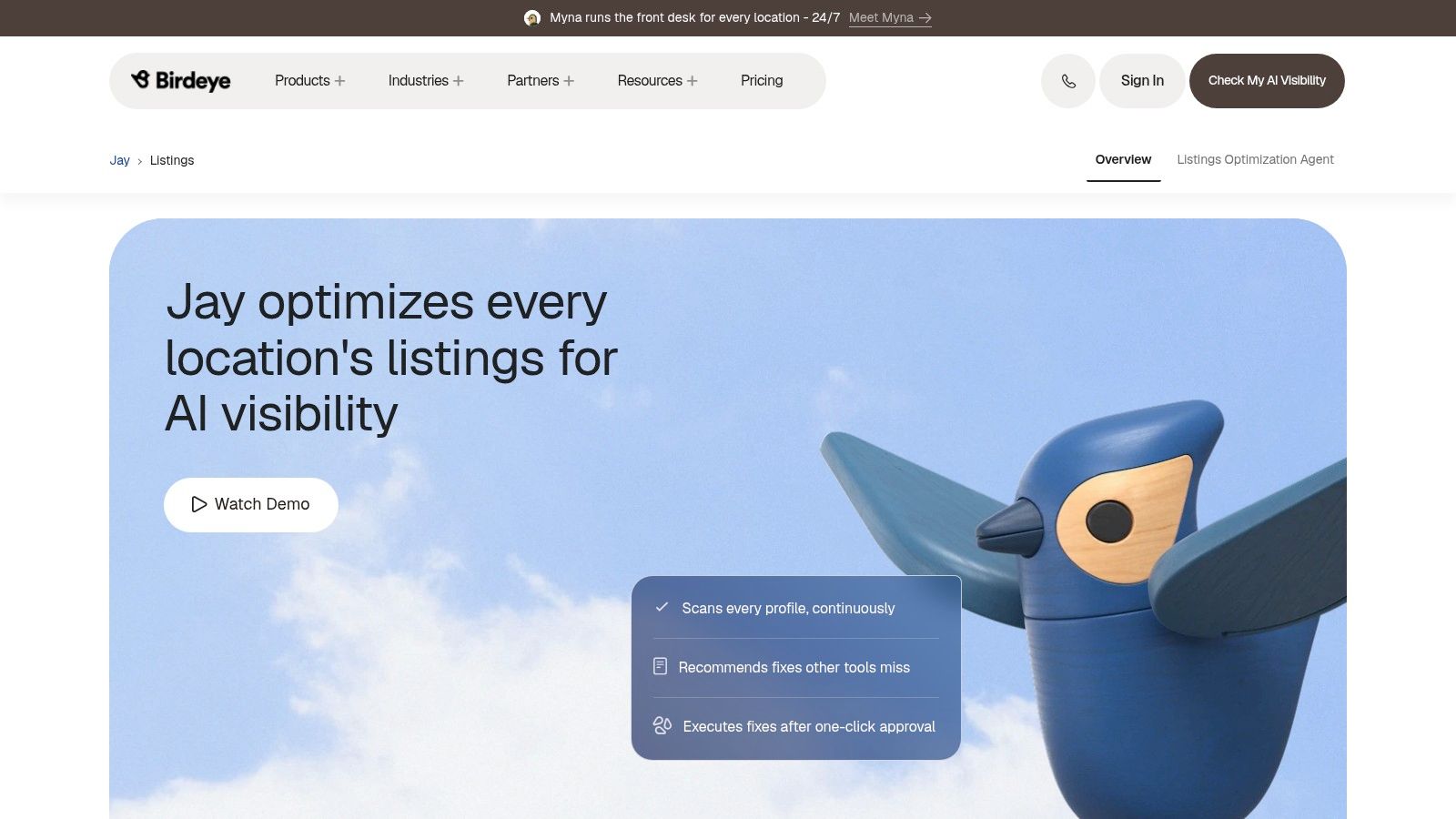
Approval-based optimization is the reason to examine Birdeye Listings AI. Its Listings Optimization Agent scans connected profiles, identifies incomplete or inaccurate information, recommends changes, and can apply approved updates.
That workflow is useful when a marketing team wants assistance without surrendering publication control. Recommendations may involve descriptions, services, photos, hours, and other profile details, but buyers should test the exact fields and directories they need.
Automation should prepare the correction faster. It shouldn’t remove accountability for whether the correction is true.
Birdeye also connects listings with reviews and customer-experience tools. That makes it relevant when the same team maintains business information and manages customer feedback, rather than treating those as separate departments.
Our guide to navigating online reviews complements the software decision by addressing the human response process. Drafting assistance doesn’t determine whether a complaint needs investigation or escalation.
Pricing is quote-based, and capabilities can vary by country. Require a demonstration using your intended market, not a generic product tour.
The main trade-off is platform breadth. A combined listings and reputation environment can reduce handoffs, but listings-only buyers may be paying for more than they need. Verify which optimization features, approval controls, and connected channels are included in the proposed contract.
8. Synup Presence
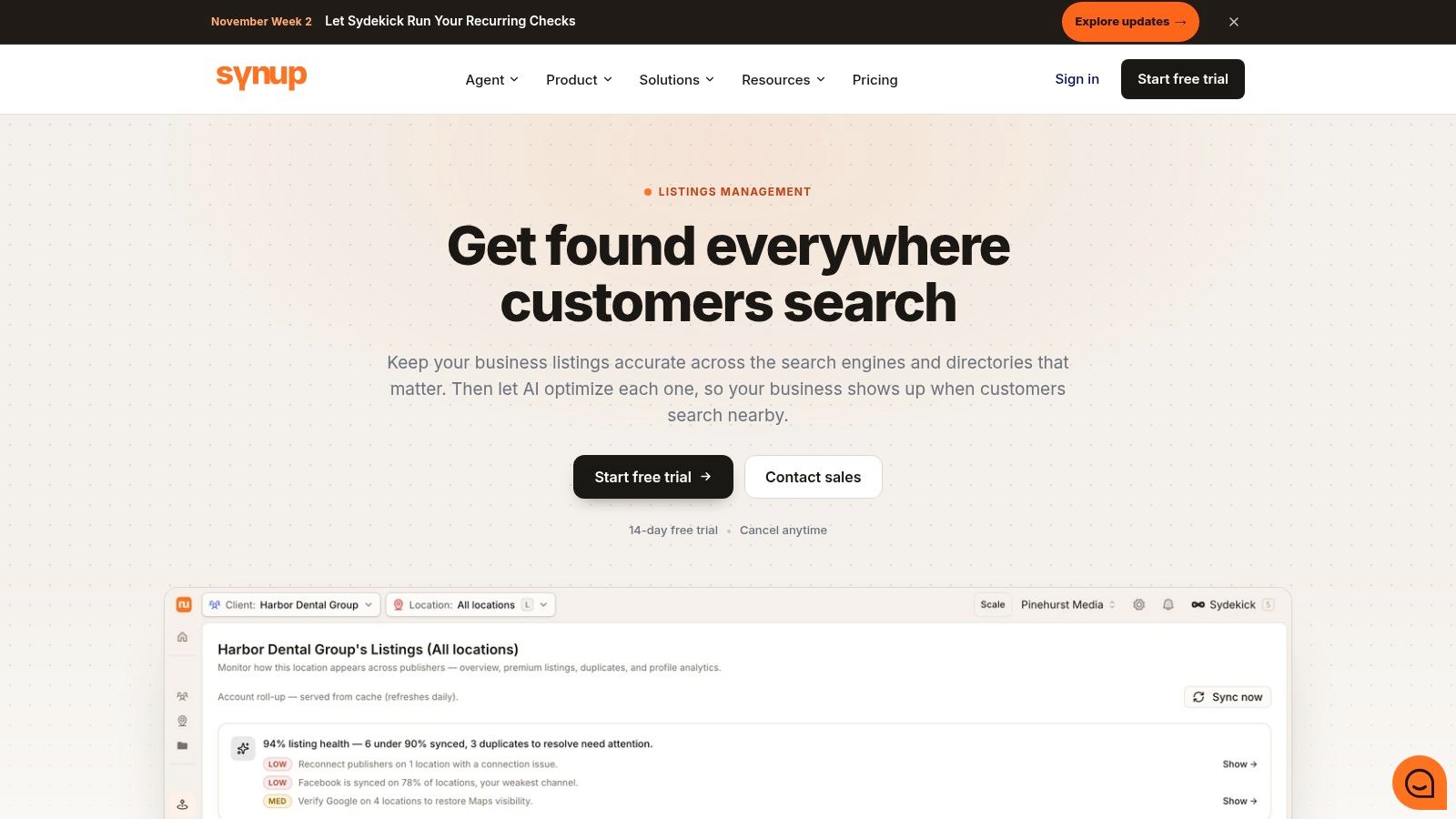
Synup Presence is the same vendor evaluated above, viewed through a narrower listings-first requirement. It isn’t an additional competitor to count separately when requesting proposals.
For a business or agency buying presence management, the relevant question is whether the central profile dashboard, distribution, review workflows, and reporting justify adopting the broader platform. Don’t let an agent demonstration distract from the basic work of keeping business records correct.
A listings-first acceptance test
Start with a location that has a known mismatch. Check whether staff can identify the authoritative record, submit the correction, inspect publication status, and understand any unresolved conflict.
Then test the agency layer if you manage clients. Client separation, branded reporting, and permissions should match your delivery process rather than require staff to work around it.
- Location allowances: Establish what counts as a billable location or managed profile.
- Automation allowances: Clarify usage limits and how they affect ongoing tasks.
- Directory coverage: Confirm support for required publishers and fields in each market.
Synup Presence is worth considering when listings maintenance routinely leads to review replies, posts, or client reporting. A business that won’t use those adjacent functions should compare the full subscription against a simpler product.
Keep the evaluation concrete: the useful outcome is a verified correction with a visible history, not merely a connected-account indicator.
9. SOCi
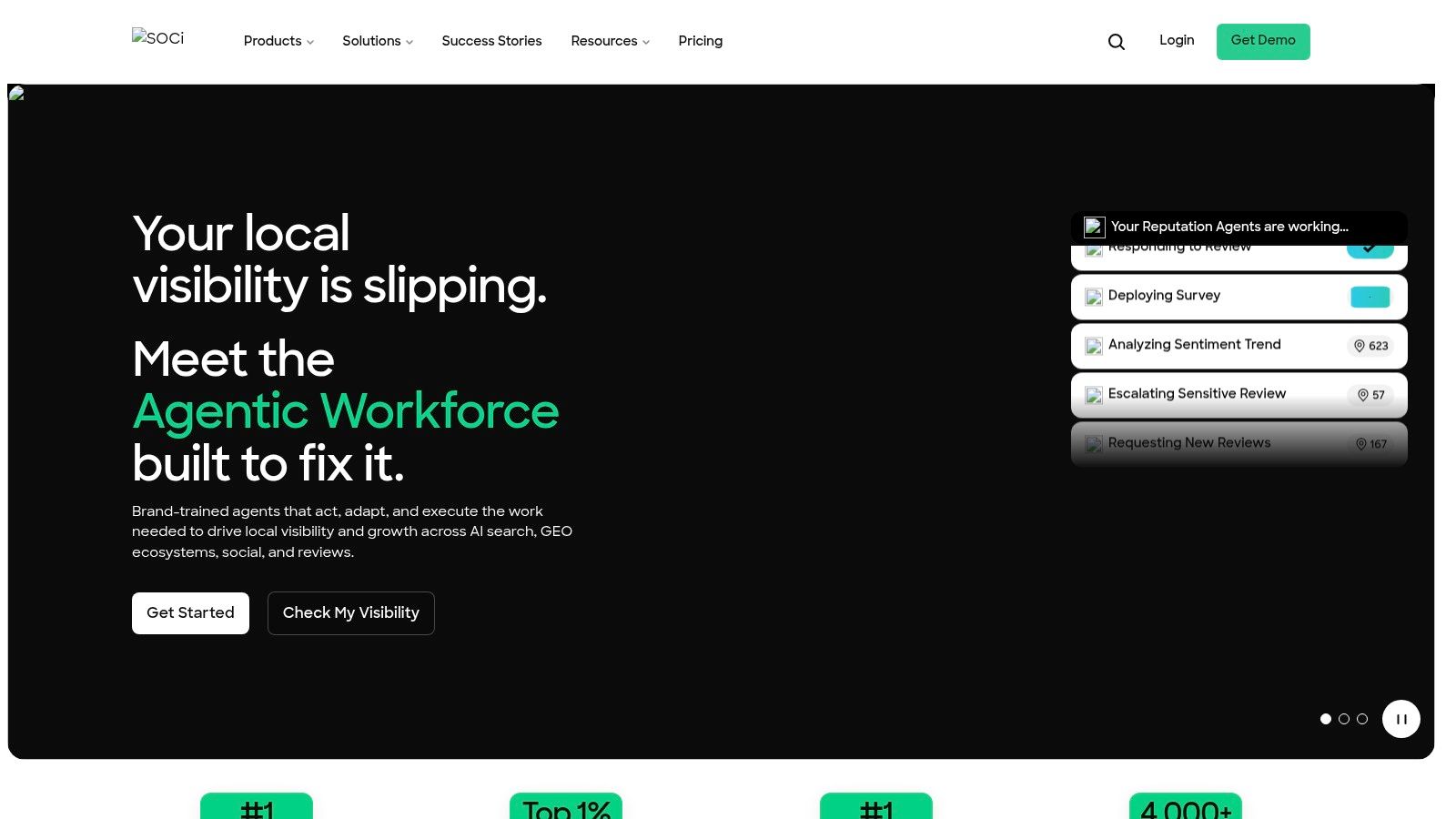
Franchise teams have a permissions problem as well as a data problem. Corporate staff need brand consistency, while local operators need to maintain information customers use. SOCi targets that distributed-brand setting.
Its Listings Management product centralizes location information and connects with a broader local marketing platform. Supported destinations include major platforms such as Google, Apple, Meta, and Yelp, alongside other directories.
The demonstration should focus on the boundary between corporate and local control. Can a franchisee suggest holiday hours without changing the approved business name? Can regional staff review updates without gaining access to unrelated locations?
- Corporate control: Identify fields that local users must not change.
- Local participation: Test submission, approval, and notification workflows.
- Reporting scope: Check whether regional managers can investigate individual exceptions.
SOCi doesn’t present a simple self-serve purchasing path comparable to a small-business subscription. Request a scoped quote and establish which listings, review, social, and automation capabilities belong to that proposal.
For a franchise, the broader platform may be appropriate because local marketing responsibilities are distributed. For a solo business or small publisher, it’s likely more structure than the task requires.
I’d prioritize permission testing over AI-assisted content demonstrations here. A franchise platform needs to prevent unauthorized changes as reliably as it publishes approved ones.
10. Thryv Listings Management
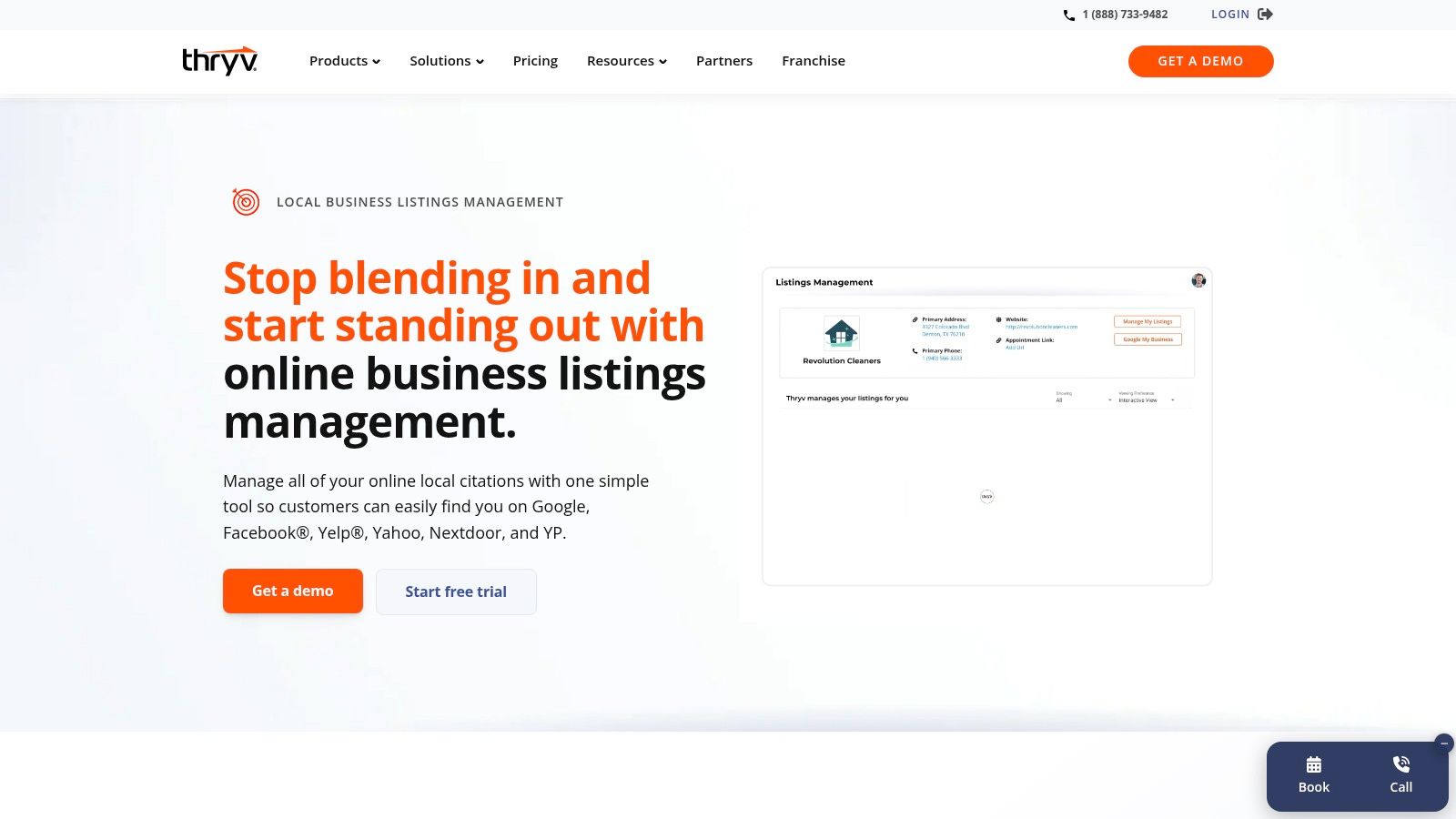
Thryv Listings Management makes the most sense when a small business also needs help managing inquiries and customers. Its appeal is operational consolidation, not the deepest local SEO analysis.
Listings sit within a broader small-business environment that can include customer management, scheduling, communications, payments, and review workflows. A service business may value that connection more than detailed competitor visibility reporting.
Follow the inquiry beyond the listing
Ask how staff move from a listing-generated call or website visit to a customer record and follow-up task. Trackable phone numbers and listing insights are useful only if the team can interpret them without confusing its public contact information.
Package-dependent pricing is the main comparison challenge. Get an itemized proposal that distinguishes listings from the broader business software and identifies what remains available if you change packages.
Thryv is less compelling when an SEO practitioner mainly needs citation investigation, map-rank analysis, or specialized reporting. A dedicated local SEO platform may suit that job better.
Also establish the limits of publisher control. Synchronization doesn’t guarantee that every directory will display every submitted record or field.
For a business already considering Thryv’s operational tools, listings can fit naturally into the purchase. For a listings-only buyer, require a clear explanation of why the wider package is necessary.
11. Localo
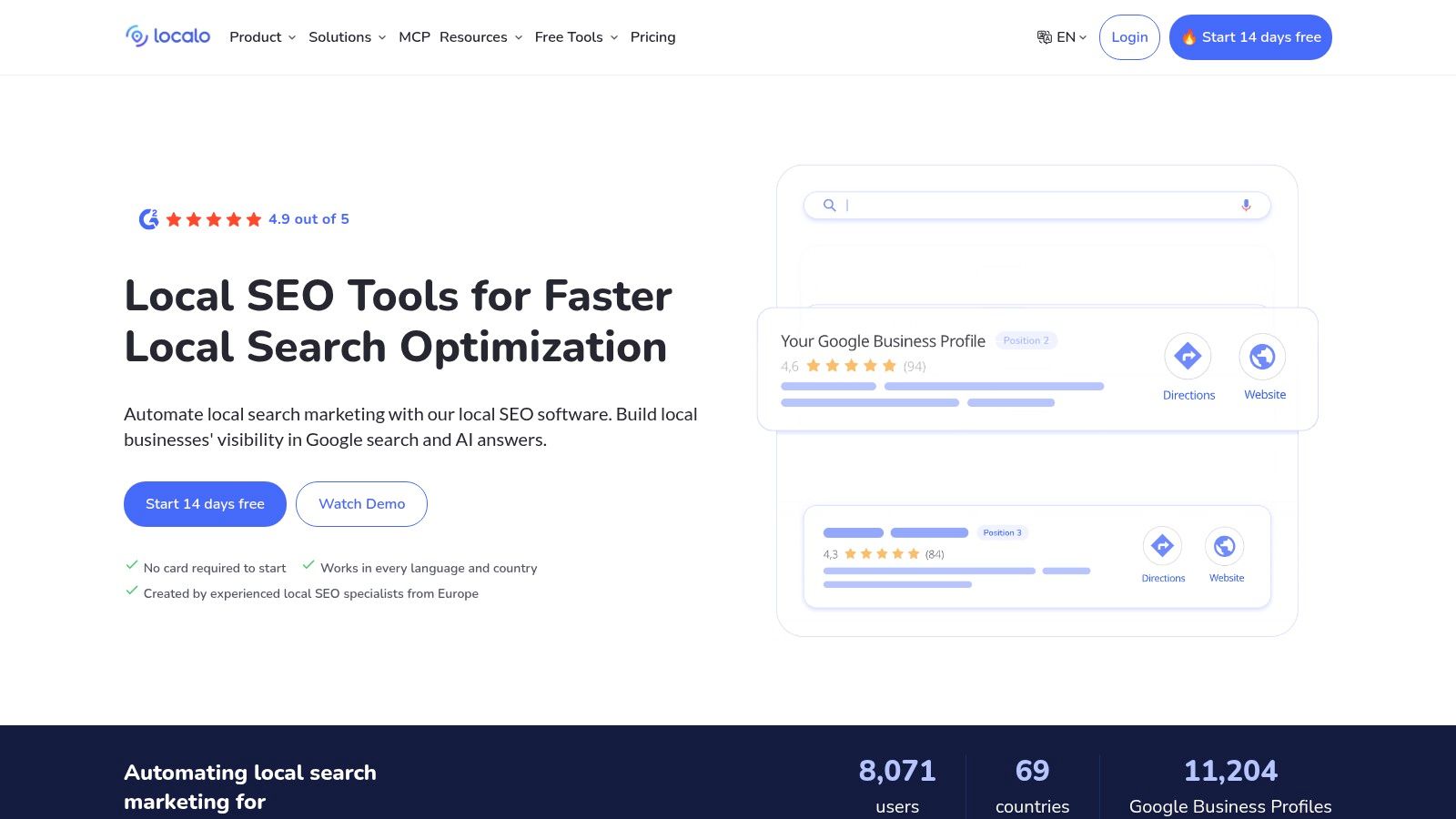
Localo is primarily a Google Business Profile optimization choice, not a direct substitute for every broad directory-synchronization platform.
Its guided tasks, profile monitoring, local position tracking, publishing, and review features suit owners who need help deciding what to work on next. Agency-oriented reporting and citation features depend on the plan.
That focus can be an advantage. An owner who struggles to maintain a Google profile may get more practical value from a clear task queue than from a large publisher network they won’t actively manage.
Scope warning: A Google-focused optimization tool and a cross-directory synchronization service solve overlapping, but different, problems.
Check profile limits, optimization allowances, reporting access, and citation functionality before purchasing. For international buyers, confirm the final billing currency and tax treatment shown at checkout rather than comparing a displayed headline amount in isolation.
Localo fits a single-location business whose immediate priority is profile maintenance and local visibility. Agencies should test whether the reporting and account structure match their client workload.
If your requirement includes ongoing corrections across Apple Maps, Bing, specialist directories, and other discovery channels, verify those capabilities explicitly. Don’t infer broad synchronization from the presence of citation-management features. Guided optimization is useful, but it shouldn’t be purchased under the wrong category.
Listing management software compared at a glance
| Tool | Starting price | Free plan or trial | Best for | Listings coverage focus |
|---|---|---|---|---|
| Synup | Not stated | Not stated | Agencies and multi-location teams seeking AI-assisted local marketing | Google, Apple, Bing, Facebook, and 100+ publishers |
| BrightLocal | $31/month, billed annually | 14-day free trial | Small businesses and agencies combining listings with local SEO | Listing synchronization through Manage; citation audits and building |
| Semrush Local Listing Management | $30/month per location, billed annually; listings included in Pro at $60 | Not stated | Teams already using Semrush for SEO | Listing distribution and business information management |
| Moz Local | $20/month per location | Not stated | Businesses seeking listings management with optional review and social tools | Listing distribution, synchronization, and listing health monitoring |
| Yext | Custom pricing | Not stated | Enterprises managing large, complex location portfolios | Publisher network distribution, centralized data, and duplicate suppression |
| Uberall | Quote-based for some plans | Not stated | Multi-location brands needing broader local marketing tools | Bulk listings management, distribution, and duplicate suppression |
| Birdeye Listings AI | Quote-based | Not stated | Multi-location teams wanting approval-based listing updates | Profile monitoring and approved updates across locations |
| Synup Presence | $39/month for one location | Free trial reported | Businesses and agencies managing profiles alongside reviews and social | Listing distribution and profile management across locations |
| SOCi | Quote-based | Not stated | Franchises and distributed multi-location brands | Centralized updates to major platforms and other directories |
| Thryv Listings Management | Package-based; standalone price not stated | Not stated | Small businesses wanting listings alongside operational tools | Business information synchronization across supported listing sites |
| Localo | $39/month, billed annually | 14-day free trial | Businesses focused on Google Business Profile visibility | Primarily Google Business Profile optimization, with citation management on applicable plans |
How to Choose and What to Do After You Pick
Choose the operating model before choosing the vendor. A blogger without an eligible local business presence doesn’t need listing management software because they publish location-related content. A local business, agency, or distributed brand should match the platform to the work someone will perform.
Use business fit to narrow the shortlist:
- Single location: Compare Moz Local and BrightLocal for maintenance, Localo for Google-focused guidance, and Thryv when customer operations also need attention.
- Agency: Evaluate BrightLocal, Semrush Local, and Synup against client separation, reporting, permissions, and delivery workload.
- Multi-location brand: Compare Uberall, Birdeye, and Synup using bulk updates, exception handling, and approval requirements.
- Franchise or enterprise: Put Yext and SOCi on the shortlist when structured data governance and distributed responsibility are central requirements.
Next, confirm which plan includes synchronization. BrightLocal Track and Semrush Local Base shouldn’t be treated as equivalent to their synchronization-enabled options. Where pricing is custom, request a written proposal covering publishers, locations, users, implementation, support, add-ons, renewal terms, and exit arrangements.
Implement clean data before automation
Audit existing listings before connecting bulk updates. Record the approved name, address, and phone number, along with hours, categories, website URLs, location identifiers, and account owners. Resolve duplicates and conflicting records before distributing a new canonical record.
Pilot the workflow on a limited group of locations. Inspect actual publisher pages, keep change logs, assign an owner for rejected updates, and schedule quarterly accuracy checks, with additional checks after moves, phone changes, or holiday-hour updates.
Build a suspension response process too. Google’s Business Profile restriction guidance explains that policy violations can restrict profiles and that an account suspension can affect every profile it manages. Preserve evidence, correct policy issues, and follow the appeal process rather than creating replacement duplicates.
Measure successful updates and unresolved errors alongside calls, website visits, and direction requests. Don’t treat visibility totals as proof of revenue.
Finally, listings aren’t a complete local search strategy. Keep local content accurate and useful, and maintain a responsible review-request and response process. Software can coordinate that work, but it can’t guarantee rankings.
Use our free Keyword Idea Generator to plan relevant local topics, the Content Brief Generator to organize them, and the Readability Improver to make drafts clearer. These NoPassiveIncome tools are free to use repeatedly alongside paid listing management software. If you’re unsure which tool class fits your business, send your location footprint, required directories, and workflow questions through our site’s contact form.
Wait! Before You Go, Read:
 +190 BEST Software Company Bios for Instagram (2026 List)
 The Benefits of Implementing Knowledge Management Software in Businesses
 Navigating Online Reviews in 2025 — Tools for Reputation Management
 Best Short Term Rental Property Management Companies in Hollywood
 How to Undo a Repost on TikTok in 2026 (Quick Guide)
 Top WooCommerce Plugins for Order, Payment & Customer Management
 5 Key Takeaways on Financial Management
 10 Benefits of Using Financial Software to Manage Your Finances
 160 Best Web Designer Bios for Instagram (2026) 🎨
 Which Distribution Software Is Right for You?
 Could Bull360 Be One of 2026’s Most Underrated Platforms?
 SE Ranking: The All-Inclusive Cloud-Based SEO Software You Need
 Super List of Tools for Bloggers – More Than 70 Resources
 What Makes Some Businesses Show Up First On Google In Singapore With Local SEO?
 What Are the Top Features of Claims Tracking Software That Improve Claims Handling Efficiency?
 260 Best Hotel Bios for Instagram (2026 List) 🏨✨
 Get Paid To Write (20 Verified Resources in 2026)
 Is Blogging Worth It in 2026? What’s Changed and What Hasn’t
 The Real ROI of Investing in Modern Business Software
 The Ultimate Guide to the Best Airbnb Accounting Software to Track Income, Expenses, and Taxes
 10 Free Online Tools to Monitor Your Social Media Influence
 New SEO Tools for You in Google Webmaster Tools and Analytics
 Maximize Your Profit with the Help of These Conversion Rate Optimisation Tools
 250 Best Ice Cream Shop Bios for Instagram 🍦 (2026 List)
What is EDI Software and Why It’s Vital for Modern Businesses